
inexplictly bound - written in stardust
Phases
Plasma
Gasses
Liquids
Solids
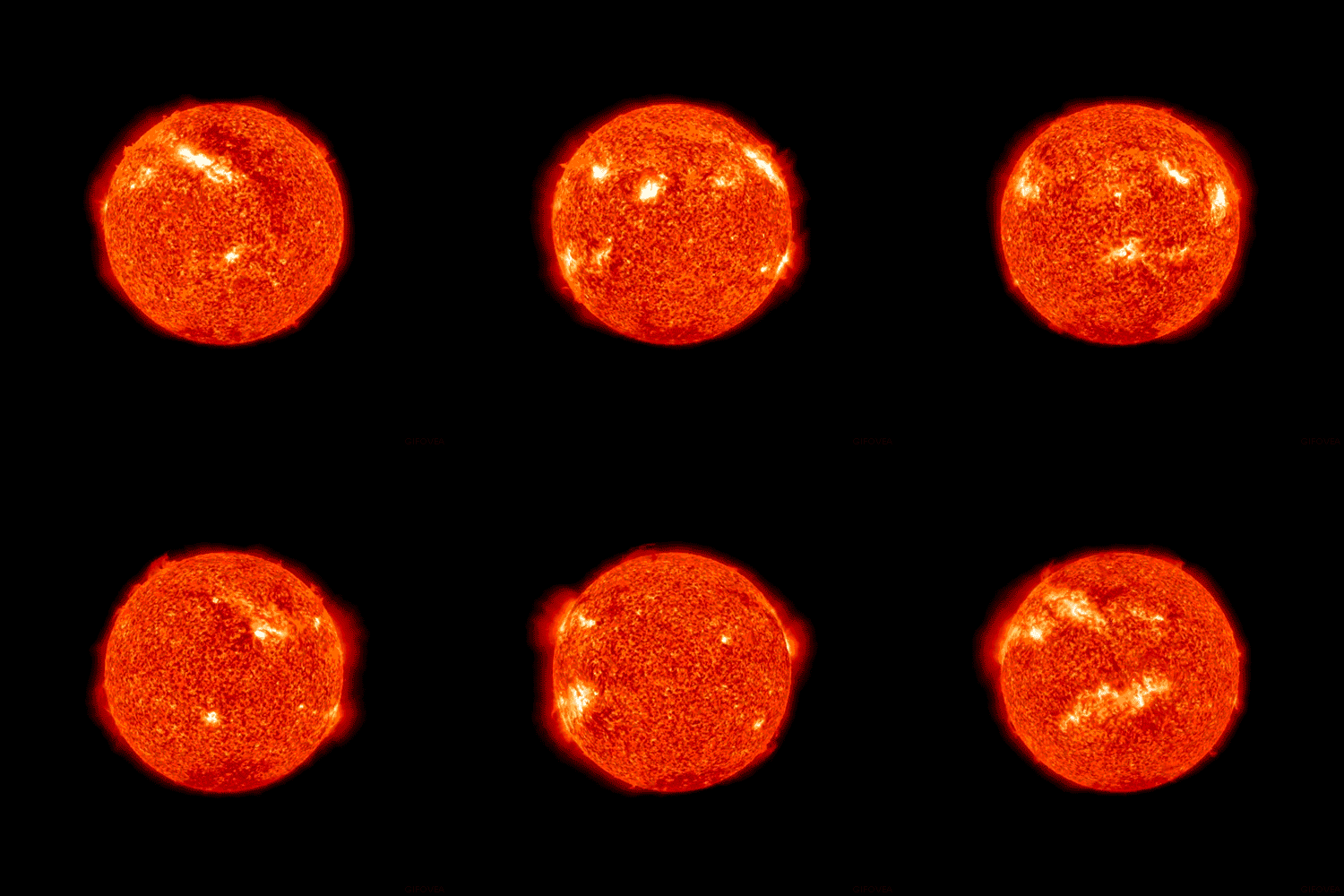
The Sun is the most visible example of plasma in our solar system, a massive ball of ionized gas where nuclear fusion occurs. Plasma is often called the fourth state of matter, existing when gas becomes so hot that electrons are stripped from atoms, creating a mixture of free electrons and ions. This state requires extremely high temperatures, typically above 7,200 degrees Fahrenheit, though the threshold varies depending on the specific material and conditions. Plasma is relatively rare on Earth but dominates the universe, comprising most of the matter in stars and the space between them.
The characteristics of plasma make it fundamentally different from ordinary gases. Unlike gases where atoms remain neutral, plasma conducts electricity and responds to magnetic fields due to its charged particles. This electromagnetic interaction gives plasma unique properties that scientists have learned to harness for various applications. The behavior of plasma can be complex and unpredictable, often exhibiting waves and instabilities that researchers continue to study in laboratories worldwide.
Creating and maintaining plasma on Earth requires specialized equipment and controlled environments. Scientists use methods such as electrical discharges, heating, and laser bombardment to generate plasma in controlled settings. One common example is the fluorescent light bulb, where an electrical discharge through gas creates a glowing plasma. Another familiar application is the plasma screen television, which uses thousands of tiny plasma cells to produce images on display panels.
Understanding plasma has opened doors to numerous technological advances and scientific discoveries. Fusion energy research relies heavily on plasma physics, as controlled fusion reactions could provide virtually limitless clean energy. Additionally, plasma technology is used in cutting, welding, sterilization, and even in medical treatments. As our knowledge of plasma deepens, new applications continue to emerge, making it an increasingly important area of scientific study.