
inexplictly bound - written in stardust
Phases
Plasma
Gasses
Liquids
Solids
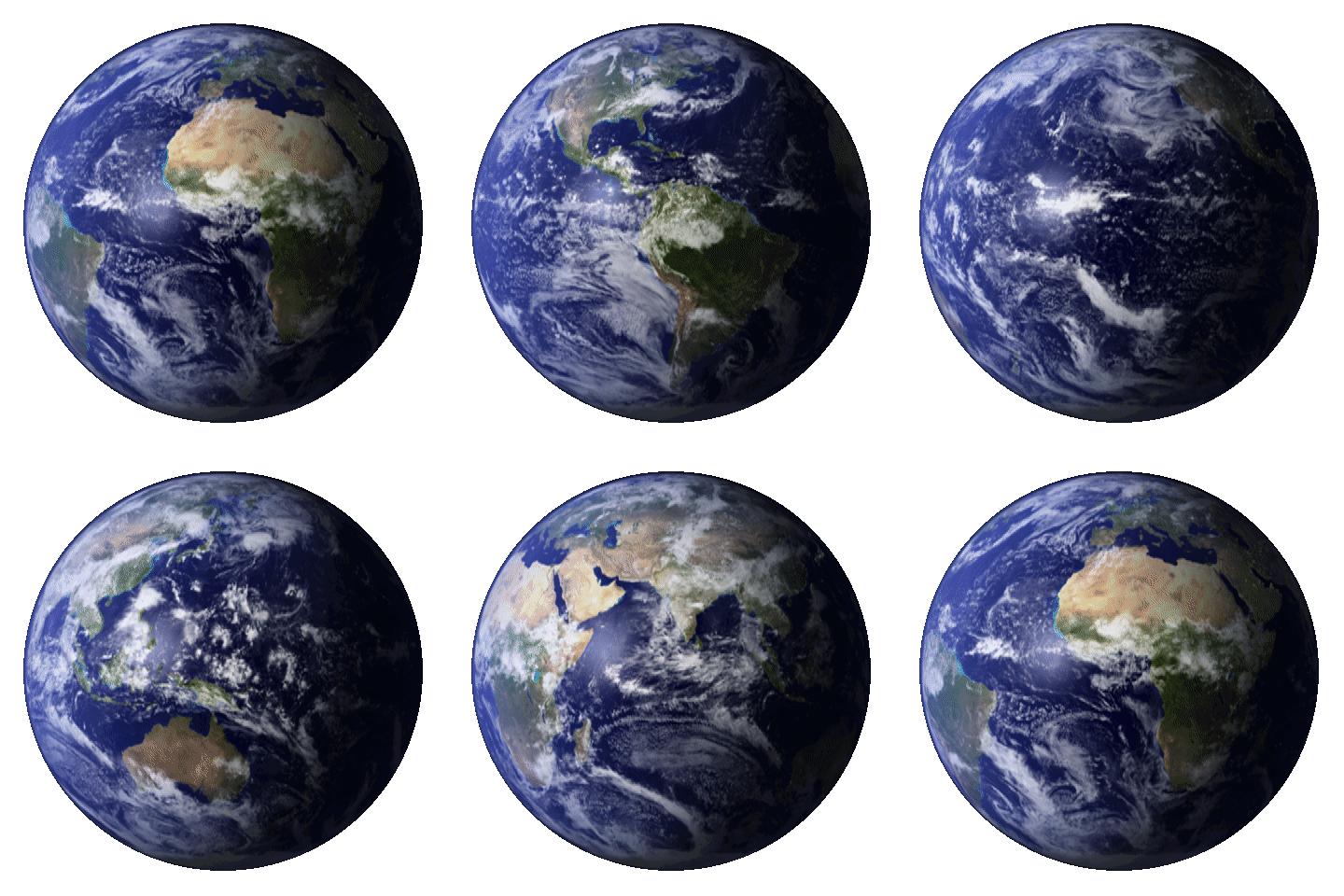
Earth is the only known planet in our solar system with abundant liquid water on its surface, making it a unique and vital component of our planet's ecosystem. The presence of liquid water is crucial for supporting life as we know it, and it plays a significant role in Earth's climate, weather patterns, and geological processes. The vast oceans, rivers, and lakes that cover about 71% of Earth's surface are all examples of liquids that contribute to the planet's dynamic environment.
Liquids are characterized by their ability to flow and take the shape of their container while maintaining a constant volume. The particles in a liquid are closely packed but not as rigidly as in solids, allowing them to move past one another. This gives liquids their unique properties, such as surface tension and viscosity. The behavior of liquids is influenced by temperature and pressure, which can cause them to expand, contract, or even change state to gas or solid under certain conditions.
On Earth, water is the most common liquid, and it exists in various forms, including freshwater, saltwater, and brackish water. The water cycle, which involves the continuous movement of water between the atmosphere, land, and oceans, is a fundamental process that sustains life and shapes the planet's climate. Additionally, other liquids such as molten rock (lava) and liquid metals play crucial roles in geological processes and the formation of planetary features.
Understanding liquids and their properties is essential for comprehending Earth's systems and the potential for liquid presence on other planets. For instance, scientists are actively searching for signs of liquid water on Mars and the icy moons of Jupiter and Saturn, as these could indicate the possibility of life beyond Earth. The study of liquids not only enhances our knowledge of planetary science but also has practical applications in various fields, including engineering, medicine, and environmental science.