
inexplictly bound - written in stardust
Phases
Plasma
Gasses
Liquids
Solids
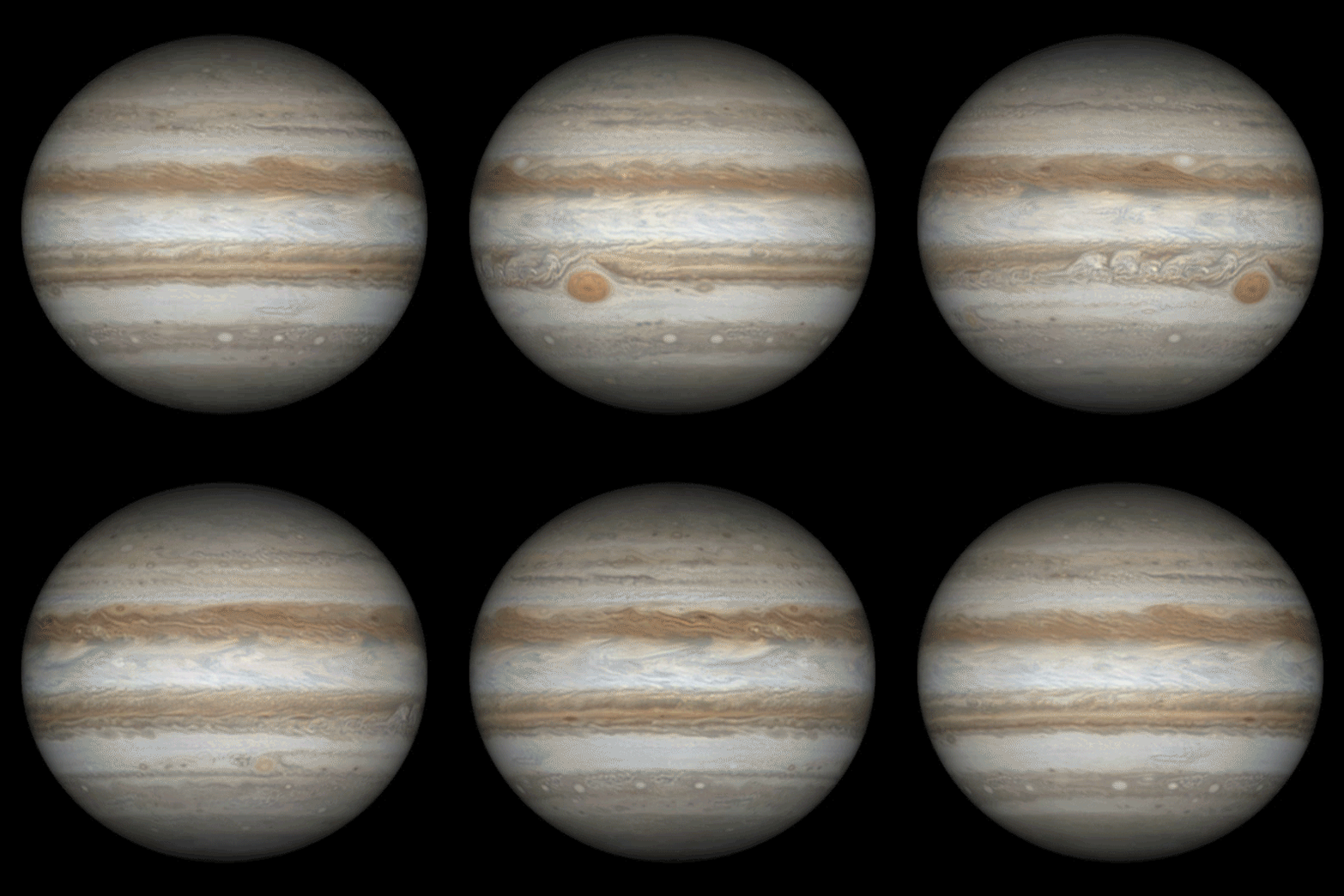
Gasses are a fundamental state of matter characterized by their ability to expand and fill any container they occupy. Unlike solids and liquids, gasses have no fixed shape or volume, and their particles are widely spaced and move freely in all directions. This high degree of particle movement gives gasses their unique properties, such as low density, compressibility, and the ability to flow easily. The behavior of gasses is governed by the kinetic theory of gases, which explains how temperature, pressure, and volume interact to influence gas behavior.
In our solar system, gasses play a crucial role in the composition and dynamics of planets and their atmospheres. For example, the gas giants Jupiter and Saturn are primarily composed of hydrogen and helium, while the terrestrial planets like Earth have thinner atmospheres made up of nitrogen, oxygen, and trace amounts of other gasses. The study of gasses is essential for understanding planetary atmospheres, weather patterns, and the potential for habitability on other worlds. Additionally, gasses are involved in various physical processes, such as the greenhouse effect, which influences a planet's climate and temperature.
Gasses can undergo phase changes, such as condensation and evaporation, depending on temperature and pressure conditions. They can also be ionized to form plasma, the fourth state of matter, under extreme conditions. The properties of gasses are described by various gas laws, including Boyle's law, Charles's law, and the ideal gas law, which provide insights into how gasses respond to changes in their environment. Understanding gasses is not only important for planetary science but also has practical applications in fields like engineering, medicine, and environmental science.